Article taken from Cook_inc.it of August 1st, 2022.
Text by Francesco Sabatini, Photo by Sara Furlanetto
After having traveled all over Italy on foot, Va ’Sentiero continues its mission: Walk, Discover, Share. The inauguration of the “Way of the Union” – a circular itinerary that from Vignola crosses the villages of the Terre di Castelli (Spilamberto, Castelvetro, Roccamalatina, Zocca and Guiglia) – was an opportunity to discover the wonders of the pre-Apennines Modenese. Throughout the province of Modena there are more than two thousand vinegar factories in which balsamic vinegar has been produced for centuries: a product that has conquered foreign markets and which in Italy is mostly known in its commercial version, a distant relative of the excellent condiment that is used in the homes of the Modenesi.
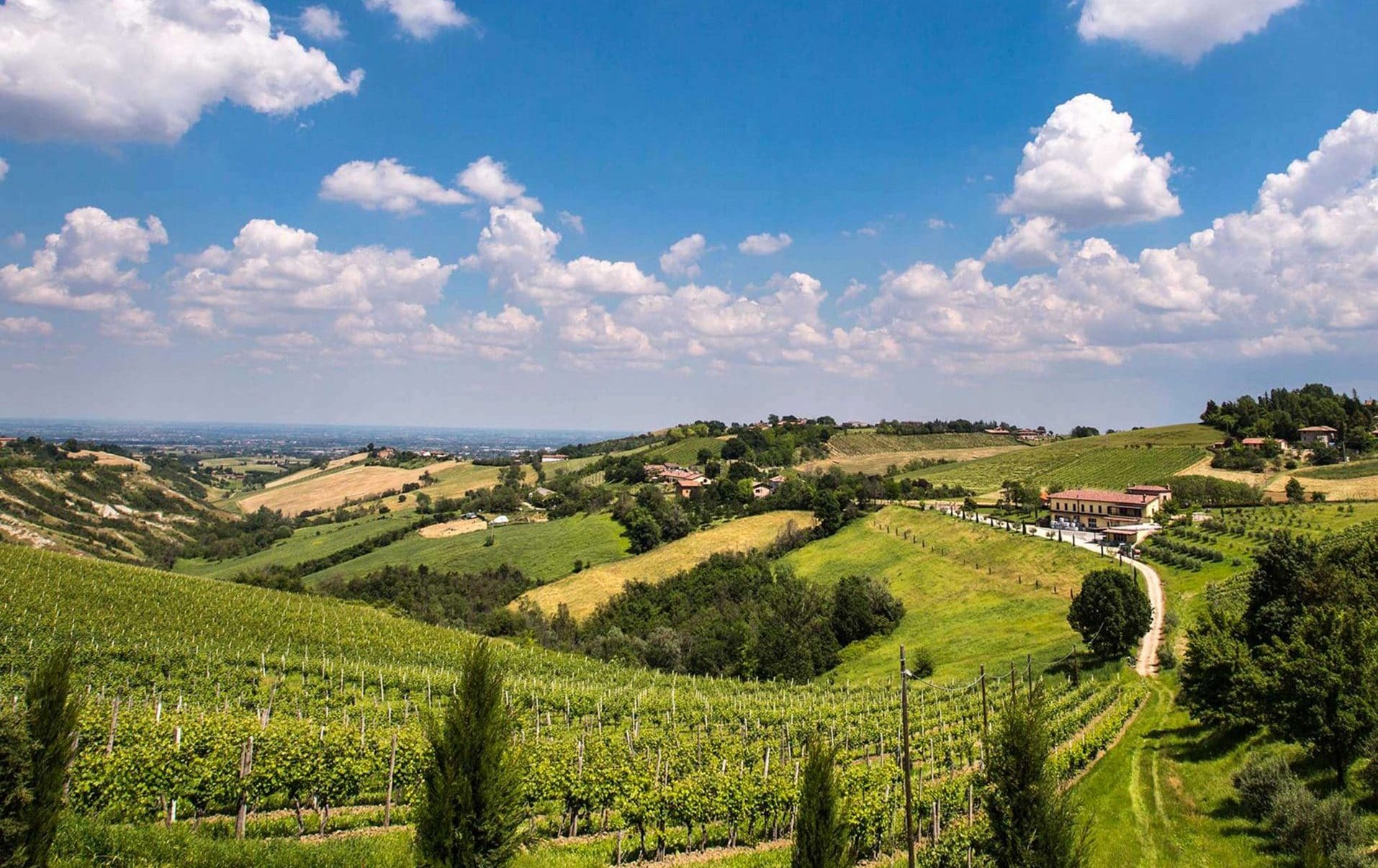
Among the rolling hills of Marano sul Panaro, in the Villabianca area, we visited the Acetaia Sereni under the guidance of Francesco, representative of the fourth generation of a long and passionate family saga that began more than a hundred years ago with great-grandmother Santina. Francesco accompanied us to discover the flavors of the authentic balsamic vinegar of Modena. The adjective “balsamic” derives from the beneficial properties attributed to this vinegar (in the past it was considered excellent for treating sore throats), whose invention is probably attributable to saba (or sapa): a sweetener obtained from cooked grape must, already used in the Roman period. The “modenese bittersweet condiment” (so called once in Italy) began to be marketed at the end of the nineteenth century and was the protagonist of a real boom in the post-war years. Despite its diffusion, its production has only been regulated since the 2000s: Traditional Balsamic Vinegar of Modena PDO in 2000, and Balsamic Vinegar of Modena PGI in 2009. Names and denominations that often, rather than clarify, confuse : the main difference between the two products is that the Traditional derives from the fermentation of the cooked must, while the PGI is made by adding wine vinegar to the cooked must. If Balsamic Vinegar IGP is in fact an industrial product, in the Traditional the artisan knowledge continues to live and perpetuate itself within the same barrels.
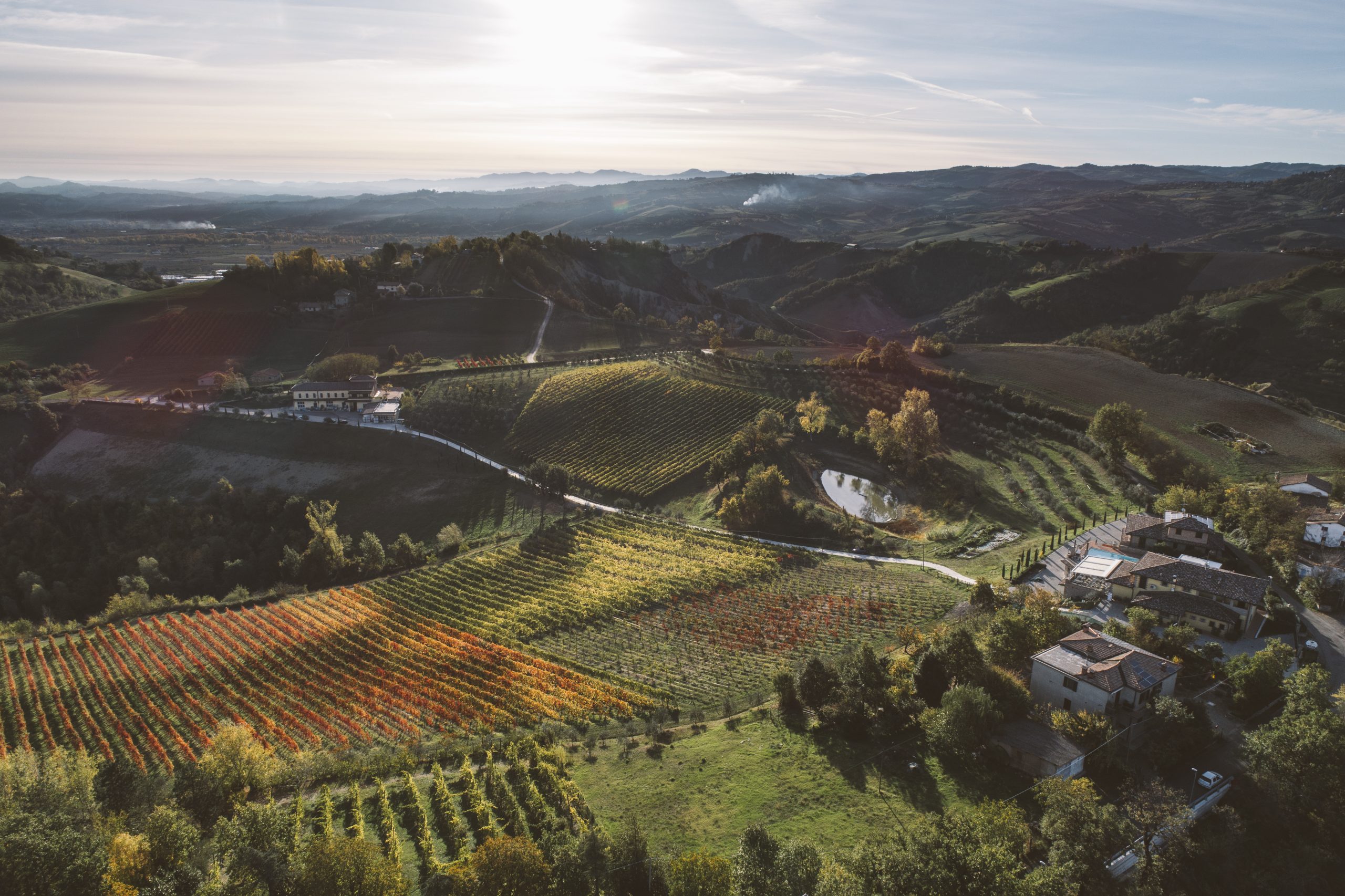
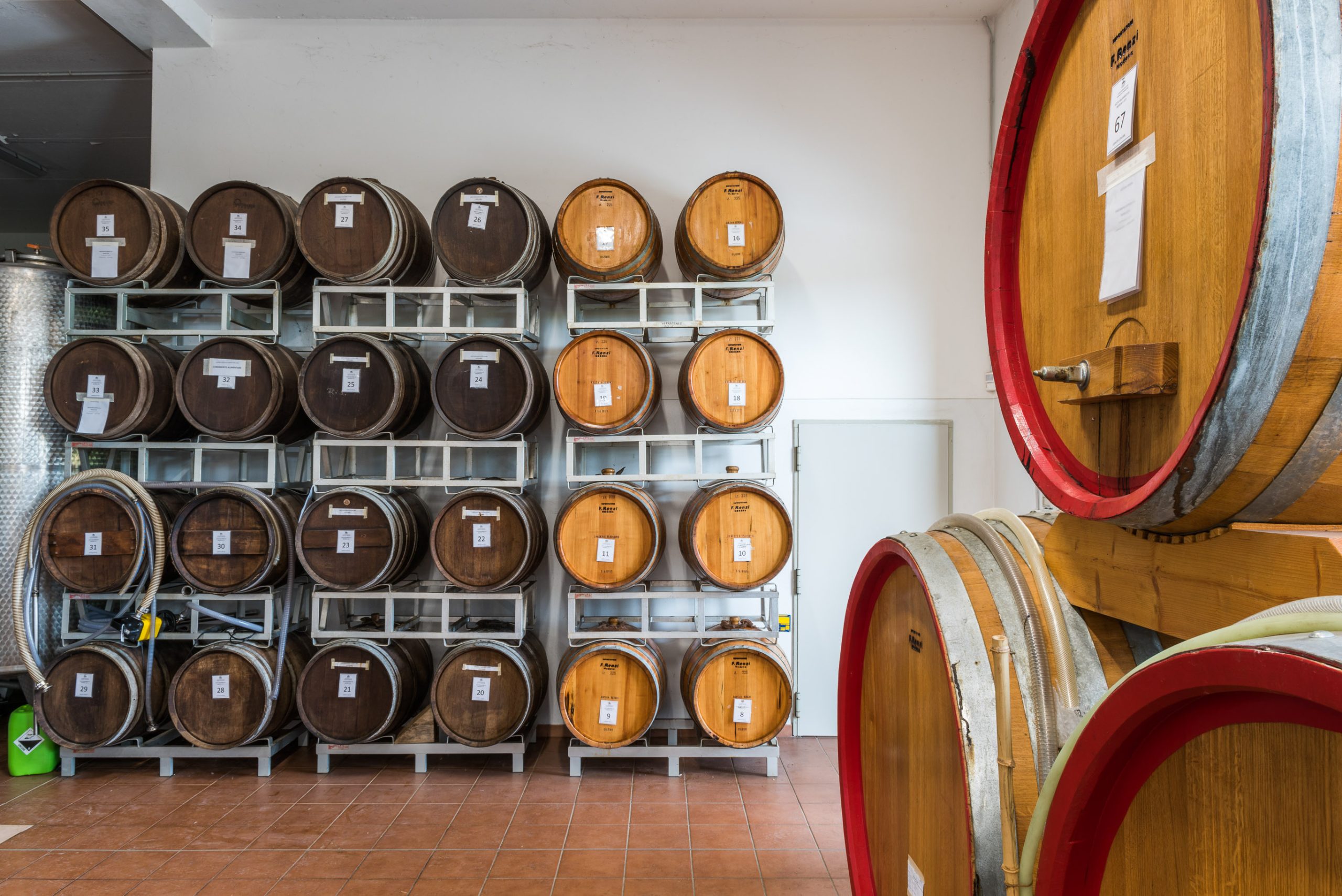
As Francesco explains, the production of Balsamic Vinegar of Modena PGI is essential to keep the entire vinegar production sector alive; to use a metaphor dear to this area, between the two products there is the same relationship that exists between the Formula One prototypes and the cars you find at the dealership. Even at Acetaia Sereni, the PGI is the product that supports the company; but although it falls under the same label as other products we find in the supermarket, we are dealing with something very different.
The work of Acetaia Sereni starts from the vineyards of Trebbiano and Lambrusco Grasparossa (while the PGI also provides for the use of raw materials from outside the province of Modena), from which crushed grapes (70% Trebbiano and 30% Lambrusco) are obtained the cooked must, made by cooking in an open vessel and direct fire. The PGI specification provides for a minimum percentage of cooked must (20%) and, for the rest, a wine vinegar aged at least ten years. At Sereni, to fully exploit the noblest part, products are made in which the ratio between cooked must and wine vinegar ranges from fifty and fifty up to eighty percent must and twenty percent vinegar. If the disciplinary provides for a minimum aging of two months, Sereni products age for at least one year; then there is the “aged” type, for five and eight years. The refinement takes place in oak and cherry barrels, which give surprisingly different flavors – even a neophyte can clearly grasp it.
The amazement at seeing about fifteen hundred barrels all arranged together in an attic is something indescribable. We are in the heart of the vinegar factory, the place where the Traditional Balsamic Vinegar of Modena PDO comes to life. The barrels are positioned in the attic: this place allows for unbalanced temperatures during the year, which allow the must to ferment, evaporate and stabilize. The alcoholic fermentation of the cooked must begins in steel tanks and continues in the abbesses, the barrels in which the acetic fermentation takes place, where part of the sugar becomes acid. Thus, from an alcoholic product we arrive at an acid-alcoholic product, the percentage of alcohol of which is lost during aging (it takes about ten years, at least), up to an acetified cooked must: a 100% product percent natural (without the addition of caramel) in which the high quality woods with which the barrels are made play a fundamental role. The families of barrels where the aging takes place, from the Renzi company in Modena (real wood sculptures, as Francesco defines them) are called “batteries”. Each battery is made up of a series of barrels, arranged by increasing volume; year after year the barrels are tucked up of the loss by evaporation with the must from the slightly larger barrel – the first, which we could define as “upstream”, is filled with the must of the abbesses.
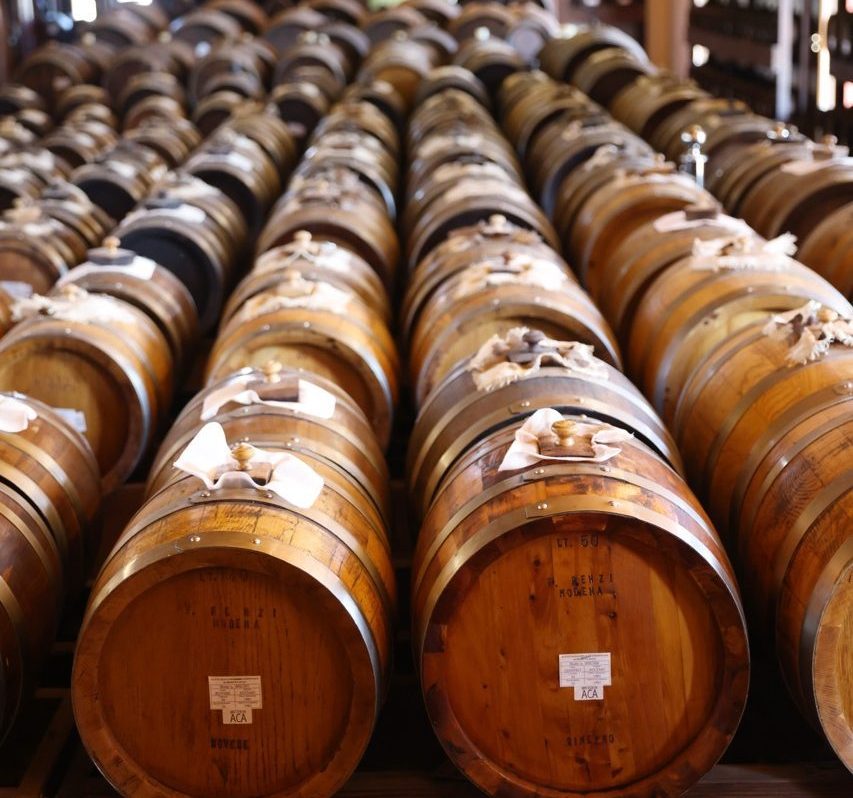
This process allows the traditional balsamic vinegar to undergo dynamic aging, which takes on the scents of different woods (oak, cherry, chestnut, mulberry and acacia). The Sereni boasts the longest battery in the world, which starts from a six-hundred-liter barrel and reaches the ten-liter barrel of Santina (Francesco’s great-grandmother), bought in the 1930s: and this is the strongest symbol of what this tradition is alive, thanks to a process that is taken care of, as in a relay race, by different generations of the Sereni family, without interruptions. With pride, Francesco explains that each member of the family has their own battery, and none are for sale.
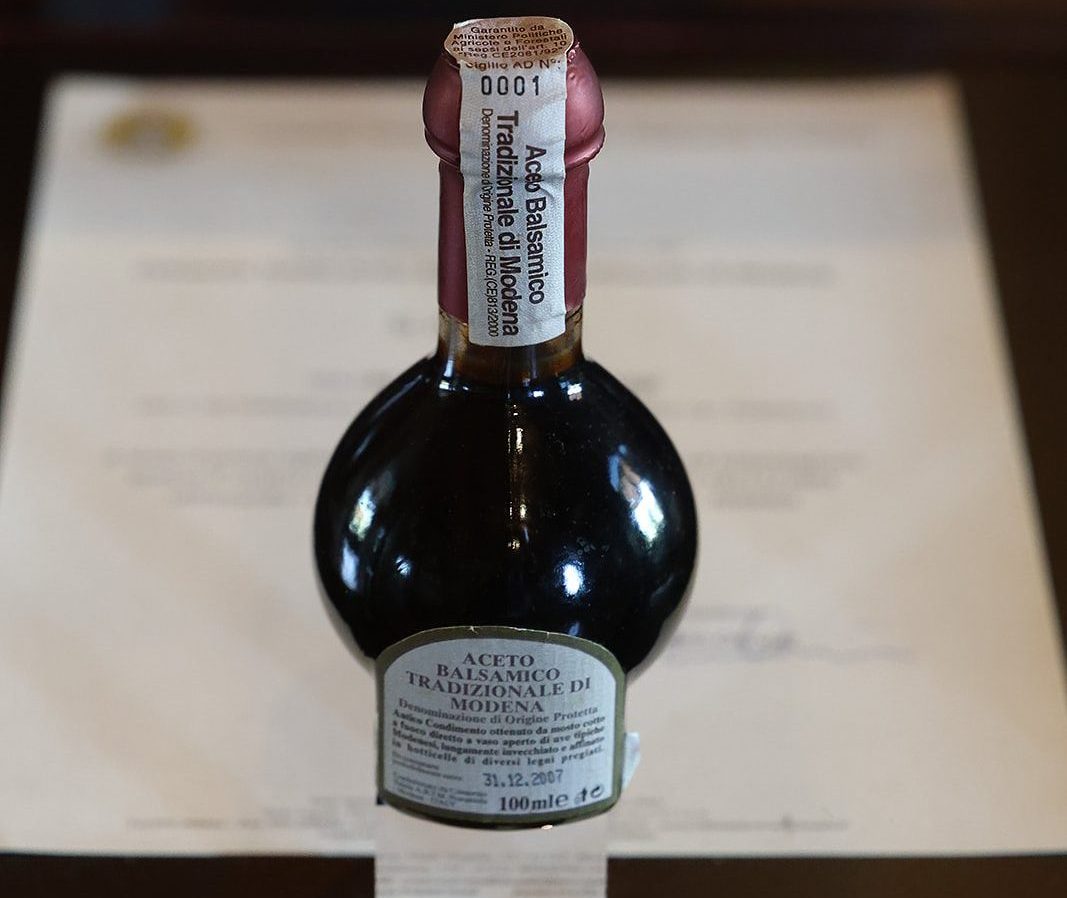
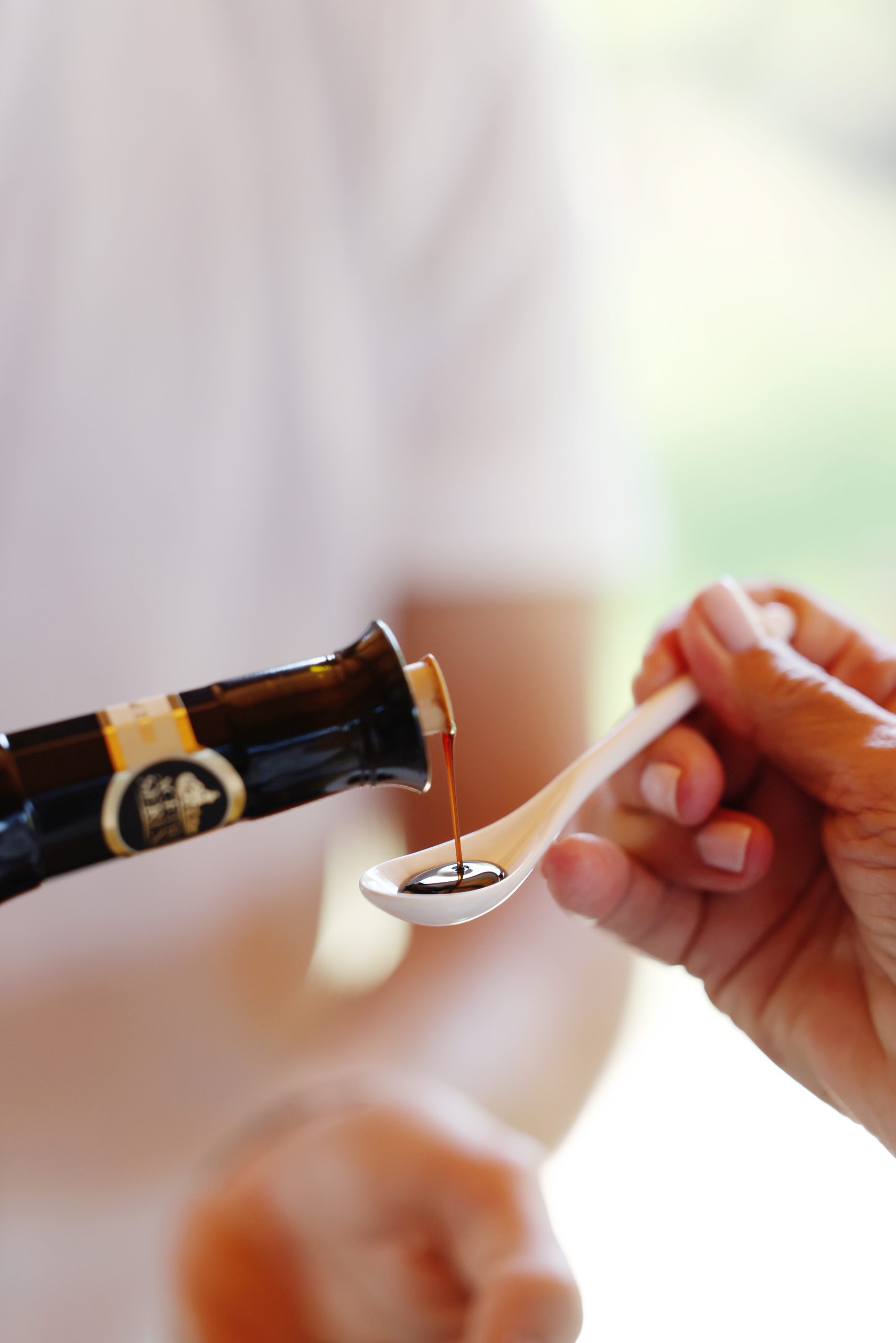
The bottling of Traditional Balsamic Vinegar PDO takes place only through the Consortium for the Protection of Traditional Balsamic Vinegar of Modena PDO, which evaluates the product (it must reach a minimum score in the blind tasting test, to receive the PDO) and to bottle it in the iconic one hundred milliliter bottle designed by the designer Giorgetto Giugiaro. When the PDO was established in 2000, Pier Luigi, Francesco’s father, was already ready to certify his product and was therefore the first to bottle Traditional Balsamic Vinegar of Modena PDO – Francesco proudly shows us the “number one”. We are struck by the tasting of the two PGIs and then the Traditional Balsamic Vinegar of Modena PDO, of which the first aged twelve years – the minimum for the traditional: a decidedly more persistent and complex flavor than the PGIs. In 25 years of aging, a balance between acidity and sweetness is perceived; the many years spent in the different types of barrels give the product the aromas of tannin, reminiscent of the astringency and flavor of the wine. With aging, the taste becomes rounded and the acidity is replaced by sweetness; the caramelized scent of cooking over high heat also emerges.
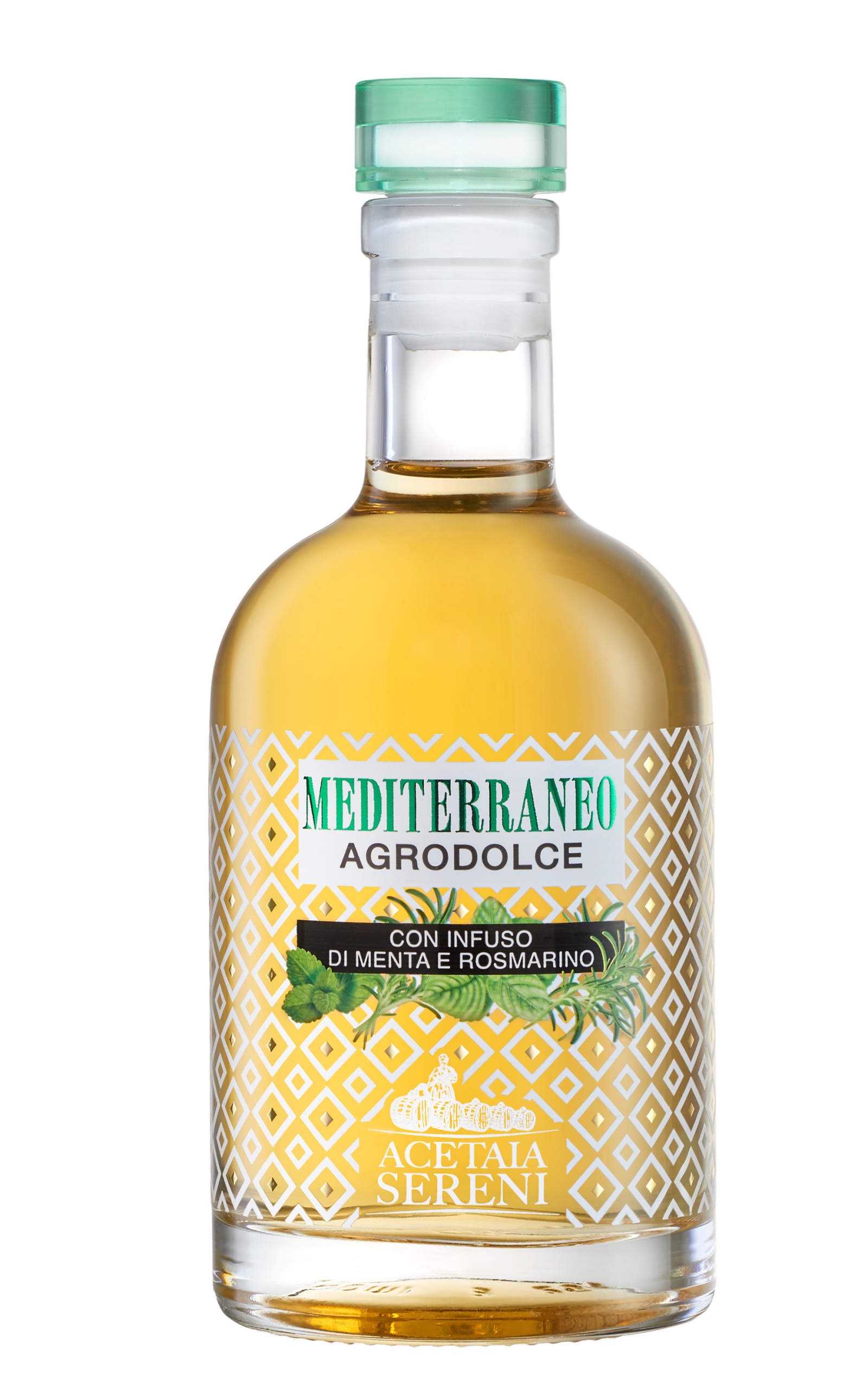
We conclude the tasting with “Mediterraneo Agrodolce”: a white balsamic that received the “Best Italian Product 2019” award in Chicago. It is a versatile product, suitable for marinades as well as mixology, made with concentrated grape must of white berried grapes and white wine vinegar infused for five months with mint and rosemary (the cooking of this grape is made with steam and never goes through a live fire). Fresh, sour and with a spicy hint, it is a step towards the future of this ancient tradition. The process of continuity and evolution fully shows the typical Emilian entrepreneurial attitude, strong in its roots but always open to innovation.
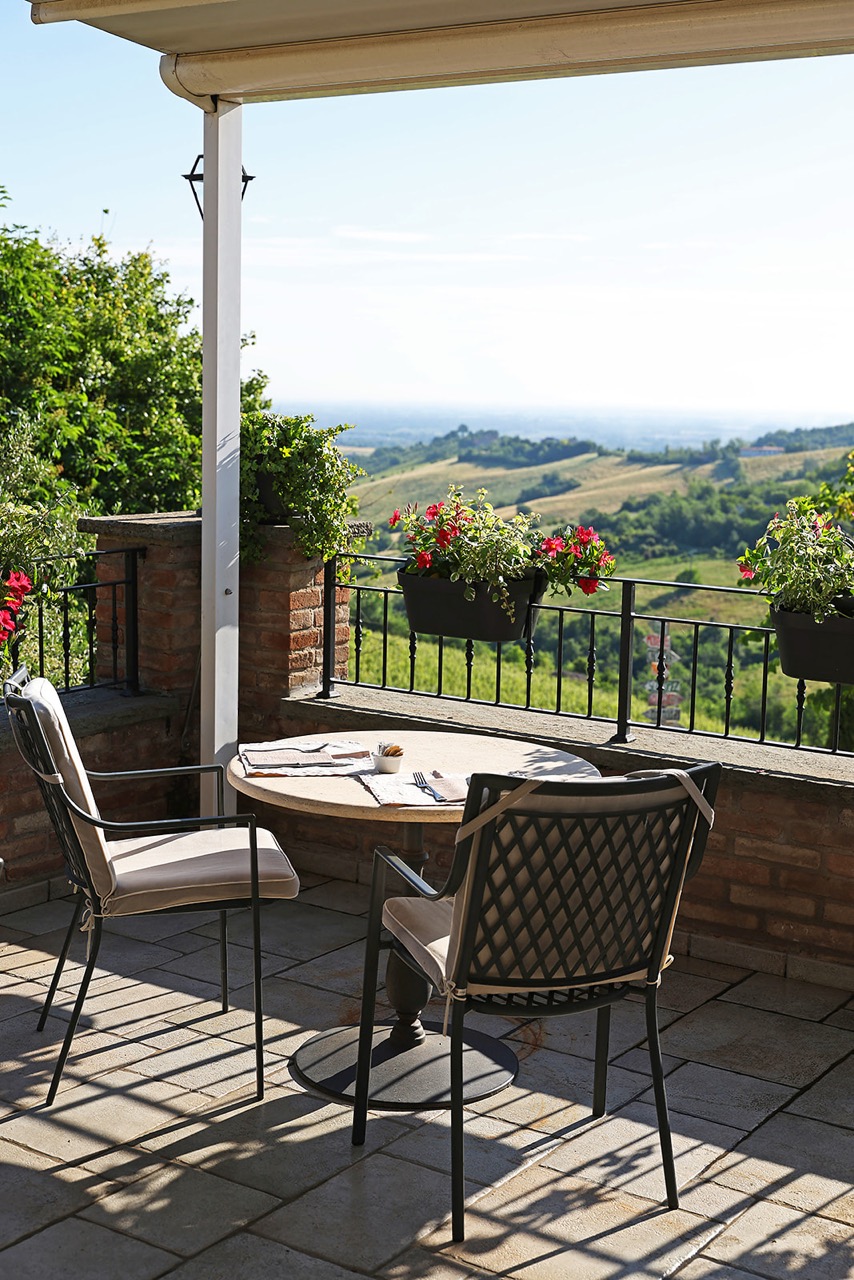
Francesco is absolutely convinced of the need to overcome the commercial confusion through the tasting method: “There is so much ignorance, traditional balsamic vinegar is exchanged for the glaze … a blasphemy”. For this reason, in recent years he has personally dealt with the creation of a splendid terrace where we, like many other tourists from all over the world (Italians are very rare), have been kidnapped by the tastes of “Modena-style bittersweet condiments” enjoying the view of the hills of Marano.
The bittersweet flavors have remained etched in my taste buds together with the questions about the mystery of the birth of this product, which remains limited within the borders of the province of Modena. In an atmosphere of other times, amidst flasks and cauldrons, I asked myself: what was the philosopher’s stone that here transformed saba, a common sweetener of Italian farmers, into a precious product like gold? A black gold that, today as in the past, continues to conquer the tables all over the world.